IT & Software
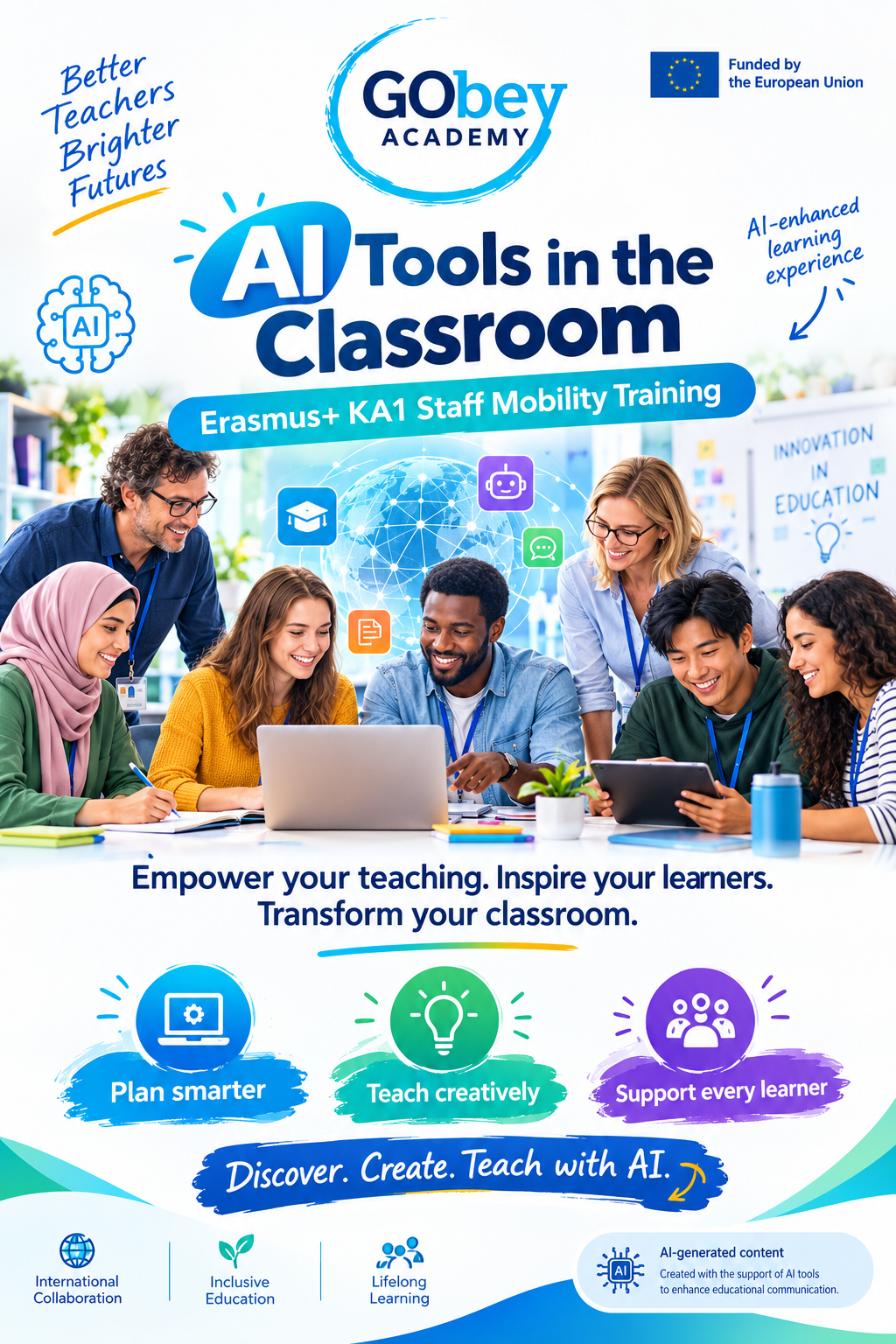
“Enhancing AI Tools in Education: Teachers Domain – AI in Classrooms”
he 30-hour “Enhancing AI Tools in Education: Teachers Domain – AI in Classrooms” course is designed to build teachers’ foundational AI literacy and equip them to use artificial intelligence responsibly and effectively in lesson planning,
- 1 Enrolled
- German,English,Turkish
The 30-hour “Enhancing AI Tools in Education: Teachers Domain – AI in Classrooms” course is designed to build teachers’ foundational AI literacy and equip them to use artificial intelligence responsibly and effectively in lesson planning, instruction, differentiation, and assessment. It focuses on practical skills that improve both teachers’ professional productivity and student learning outcomes.frontiersin+2
Core objectives
The main goal is to strengthen teachers’ AI literacy so they can select, adapt, and apply AI tools in ways that align with pedagogical aims while safeguarding student data and academic integrity. The course also aims to develop critical awareness of data privacy, copyright, ethical use, and algorithmic bias, enabling teachers to make informed decisions and set clear classroom guidelines for AI use. By the end, participants should be able to design context-appropriate AI usage policies and student-facing instructions for their own schools.frontiersin+2
Course content
The 30-hour program typically follows a modular, hands-on structure covering: foundational AI concepts and prompt engineering; using AI for lesson planning and teaching materials; student data, privacy, and security; academic integrity and assessment; differentiation and feedback; and designing AI-supported classroom activities. Participants work with tools such as generative AI platforms, Canva, and similar applications to create presentations, visuals, audio, and text-based resources; develop AI-enhanced feedback strategies; and support students’ own AI literacy. Content is balanced to boost both individual teacher efficiency (administrative tasks, resource creation) and pedagogical effectiveness (student-centered, inclusive practices).lumsx.lums.edu+1
Expected outcomes
Upon completion, teachers can confidently choose and integrate AI tools aligned with learning goals, critically evaluate AI-generated outputs, and implement safe, ethical AI practices in their classrooms. Concrete outputs include AI-supported lesson plans, differentiated activity examples, assessment rubrics, AI usage guides for students and parents, and draft school-level AI policy recommendations. In the longer term, teachers’ digital confidence increases, their capacity to develop sustainable pedagogical practices grows, and the school culture benefits from more responsible and reflective AI use.
PROGRAMME DESCRIPTION
This six-day, 30-hour professional development programme supports teachers in using artificial intelligence tools effectively, creatively, ethically and safely in classroom practice. The training combines practical AI applications with pedagogical planning, inclusive education, assessment, data privacy, digital wellbeing and academic integrity.
Participants explore how AI can support lesson planning, teaching-material design, differentiated learning, formative assessment and feedback. At the same time, the programme emphasises that AI should support—not replace—teachers’ professional judgement, responsibility and relationships with learners.
By the end of the course, each participant will create a practical AI-supported lesson or classroom activity, together with a personal implementation plan for use in their own school.
DAY 1 — AI FOUNDATIONS FOR EDUCATION
Theme: Understanding Artificial Intelligence and Its Role in the Classroom
Duration: 5 hours
Learning Objectives
By the end of Day 1, participants will be able to:
- Explain the basic concepts of artificial intelligence in clear and accessible language.
- Distinguish between generative AI, search tools, recommendation systems and automated decision-making.
- Identify opportunities, limitations and risks of AI use in education.
- Reflect on their own confidence, concerns and expectations regarding AI.
- Identify one classroom challenge that may be supported by AI tools.
Programme Activities
09:00–09:30 — Welcome, introductions and training overview
Participant introductions, icebreaker activity and expectations collection.
09:30–10:30 — What is Artificial Intelligence?
Introduction to AI, machine learning, generative AI, large language models and AI-generated content.
10:30–10:45 — Break
10:45–12:00 — AI in Everyday Life and Education
Discussion of AI tools already used in schools, learning platforms, mobile applications and digital environments.
12:00–13:00 — Benefits, Risks and Common Myths
Interactive group activity: “AI Fact, AI Myth or AI Risk?”
13:00–14:00 — Lunch Break
14:00–15:00 — Introduction to AI Tools for Teachers
Guided exploration of selected AI tools for text generation, image creation, presentations, lesson planning and classroom activities.
15:00–16:00 — Classroom Challenge Mapping
Participants identify a teaching or learning challenge they would like to address through AI during the course.
Daily Output
Each participant prepares an AI Learning Goal Card including:
- Subject area and learner age group
- One classroom challenge
- One possible AI-supported solution
- One ethical, practical or data-protection concern to consider
DAY 2 — PROMPTING AND AI-SUPPORTED LESSON PLANNING
Theme: Using AI Effectively for Planning and Content Preparation
Duration: 5 hours
Learning Objectives
By the end of Day 2, participants will be able to:
- Write clear and purposeful prompts for educational use.
- Improve AI responses through specific instructions, context and quality criteria.
- Use AI tools to support lesson planning and teaching preparation.
- Create curriculum-relevant and age-appropriate learning materials.
- Review AI-generated content for accuracy, bias and pedagogical suitability.
Programme Activities
09:00–09:30 — Day 1 Review and AI Warm-Up
Short practical prompt challenge.
09:30–10:30 — Prompting Fundamentals
How to structure a strong prompt: role, task, context, learner profile, output format, limitations and success criteria.
10:30–10:45 — Break
10:45–12:00 — Prompt Laboratory I
Hands-on practice with prompts for lesson plans, learning outcomes, classroom questions and differentiated tasks.
12:00–13:00 — AI-Assisted Lesson Design
Developing a lesson sequence including introduction, learning activities, formative assessment and reflection.
13:00–14:00 — Lunch Break
14:00–15:00 — Prompt Laboratory II
Creating worksheets, reading texts, vocabulary tasks, quizzes, discussion questions and creative classroom activities.
15:00–16:00 — Quality Assurance and Peer Review
Participants use a checklist to evaluate AI-generated materials for factual accuracy, language level, inclusion, bias, copyright and classroom value.
Daily Output
Participants develop the first draft of an AI-supported lesson plan, including:
- Learning objectives
- Target group and subject
- AI-supported activity or learning resource
- Prompts used
- Teacher review and adaptation steps
DAY 3 — CREATIVE AND INCLUSIVE LEARNING MATERIALS
Theme: Designing Engaging Classroom Resources with AI
Duration: 5 hours
Learning Objectives
By the end of Day 3, participants will be able to:
- Create engaging text, visual, presentation and activity materials using AI tools.
- Design resources for different learning styles and ability levels.
- Adapt content for multilingual learners and learners with additional support needs.
- Use AI to improve accessibility, creativity and learner engagement.
- Apply basic awareness of copyright, attribution and responsible content use.
Programme Activities
09:00–09:30 — Inspiration Gallery
Review of AI-supported examples: worksheets, visual materials, presentations, stories, quizzes and classroom games.
09:30–10:30 — AI for Visual Learning
Creating concept visuals, flashcards, infographics, posters and image-based classroom tasks.
10:30–10:45 — Break
10:45–12:00 — AI for Text and Language Learning
Creating reading materials, simplified texts, stories, summaries, comprehension questions and vocabulary activities.
12:00–13:00 — AI for Presentations and Active Learning
Developing presentations, project instructions, station-learning tasks and interactive classroom activities.
13:00–14:00 — Lunch Break
14:00–15:00 — Differentiation Workshop
Participants adapt one teaching resource for learners at different ability levels, language levels or support needs.
15:00–16:00 — Resource Showcase and Peer Feedback
Participants present their materials and receive feedback on creativity, clarity, accessibility, inclusion and classroom usability.
Daily Output
Each participant creates an AI-supported mini resource pack containing:
- One visual resource, infographic or classroom poster
- One worksheet or learner activity
- One differentiated version for a specific learner group
- A short teacher guidance note explaining how the materials will be used
DAY 4 — ASSESSMENT, FEEDBACK AND ACADEMIC INTEGRITY
Theme: Supporting Assessment and Feedback with AI
Duration: 5 hours
Learning Objectives
By the end of Day 4, participants will be able to:
- Use AI to support formative assessment and timely feedback.
- Create quizzes, rubrics, exit tickets and learner self-reflection tools.
- Apply human judgement when using AI-assisted feedback.
- Identify appropriate and inappropriate uses of AI by learners.
- Develop classroom expectations for transparency, authorship and academic integrity.
Programme Activities
09:00–09:30 — Reflection: Assessment Challenges
Discussion on feedback workload, learner needs and assessment priorities.
09:30–10:30 — AI for Formative Assessment
Designing diagnostic questions, quizzes, polls, exit tickets and learning checks.
10:30–10:45 — Break
10:45–12:00 — AI-Assisted Feedback with Teacher Oversight
Developing feedback prompts and reviewing tone, fairness, accuracy, sensitivity and learner appropriateness.
12:00–13:00 — Rubrics and Success Criteria
Creating transparent assessment rubrics for written tasks, projects, presentations and group work.
13:00–14:00 — Lunch Break
14:00–15:00 — Academic Integrity in the AI Era
Case studies on homework, AI-generated essays, responsible AI use, disclosure and authorship.
15:00–16:00 — Classroom AI Use Agreement
Participants develop clear classroom rules for ethical, transparent and responsible learner use of AI.
Daily Output
Participants create:
- One AI-supported formative assessment activity
- One assessment rubric or feedback template
- A draft Classroom AI Use Agreement for learners
DAY 5 — ETHICS, DATA PRIVACY AND INCLUSION
Theme: Responsible, Safe and Inclusive AI Use in Schools
Duration: 5 hours
Learning Objectives
By the end of Day 5, participants will be able to:
- Identify ethical issues related to AI use in education.
- Apply basic data-protection principles when using AI tools.
- Recognise bias, discrimination, misinformation and stereotypes in AI-generated content.
- Use AI in ways that support accessibility and inclusion.
- Decide when AI use is appropriate and when it should be avoided.
Programme Activities
09:00–09:30 — Ethical Dilemma Activity
Small-group discussion of classroom scenarios involving AI use.
09:30–10:30 — Ethics and Human-Centred AI
Teacher responsibility, human oversight, fairness, transparency, accountability and learner wellbeing.
10:30–10:45 — Break
10:45–12:00 — Privacy and Data Protection
Student data, safe prompting, sensitive information, consent, data minimisation and selecting appropriate platforms.
12:00–13:00 — Bias and Misinformation Workshop
Participants analyse AI outputs for factual mistakes, stereotypes, hidden assumptions and missing perspectives.
13:00–14:00 — Lunch Break
14:00–15:00 — Inclusive Teaching with AI
Using AI to support multilingual learners, learners with special educational needs and differentiated pathways.
15:00–16:00 — Responsible AI Tool Checklist
Teams develop a practical checklist for evaluating AI tools before classroom use.
Daily Output
Participants complete an AI Tool Risk and Readiness Checklist covering:
- Pedagogical purpose
- Age appropriateness
- Data privacy and security
- Bias, fairness and representation
- Accessibility and inclusion
- Teacher oversight
- Accuracy and verification
- Academic integrity
DAY 6 — CLASSROOM IMPLEMENTATION AND FINAL SHOWCASE
Theme: From Training to Sustainable School Practice
Duration: 5 hours
Learning Objectives
By the end of Day 6, participants will be able to:
- Finalise an AI-supported classroom activity or lesson plan.
- Present and explain the pedagogical and ethical rationale behind their work.
- Use peer feedback to improve their teaching design.
- Develop a personal implementation plan for their school.
- Identify opportunities for future European cooperation and dissemination.
Programme Activities
09:00–09:30 — Review and Final Preparation
Final review of lesson plans, materials, assessment tools and AI risk checklists.
09:30–11:00 — AI Classroom Project Studio
Participants complete their individual or group classroom implementation project.
11:00–11:15 — Break
11:15–12:30 — Participant Presentations
Each participant presents an AI-supported classroom activity, including teaching context, AI tool, prompts, expected learning outcomes and ethical safeguards.
12:30–13:00 — Peer Feedback Session
Participants use the “Two Strengths and One Recommendation” feedback method.
13:00–14:00 — Lunch Break
14:00–15:00 — From Pilot to Practice
Participants create a personal action plan for implementing AI-supported teaching in their own school.
15:00–16:00 — Final Evaluation and Certificates
Final reflection, self-assessment, course evaluation and certificate ceremony.
Daily Output
Each participant completes a Personal AI Implementation Plan including:
- First AI-supported lesson or activity to be delivered
- Timeline for implementation
- Learner group and learning objectives
- AI tools to be used
- Privacy and ethical safeguards
- Colleagues or school stakeholders to involve
- Method for evaluating the classroom activity
FINAL PARTICIPANT PORTFOLIO
At the end of the six-day training, participants will have prepared an “AI in the Classroom Portfolio” containing:
- Personal AI learning goals and reflection
- AI-supported lesson plan
- Collection of practical prompts for teaching
- AI-supported mini resource pack
- Differentiated learning activity
- Formative assessment or feedback tool
- Assessment rubric or feedback template
- Classroom AI Use Agreement
- AI Tool Risk and Readiness Checklist
- Personal school implementation plan
EXPECTED LEARNING OUTCOMES
Upon successful completion of the course, participants will be able to:
- Explain core AI concepts and their relevance to education.
- Select AI tools based on clear pedagogical objectives.
- Use effective prompts for lesson planning, learning resources, differentiation and assessment.
- Create high-quality AI-supported teaching materials.
- Review AI-generated content for accuracy, bias, relevance and age appropriateness.
- Use AI to support inclusive, student-centred and differentiated learning.
- Apply ethical principles, privacy awareness and human oversight in AI-supported teaching.
- Address academic integrity, transparency and learner authorship in the age of generative AI.
- Design and implement a practical, safe and responsible AI-supported classroom activity.
- Share acquired knowledge and good practices with colleagues after the mobility period.
ASSESSMENT AND EVALUATION
Participant progress is assessed through continuous participation and practical outputs rather than a written examination.
Participation in workshops, activities and peer learning: 20%
AI-supported lesson plan and prompt design: 25%
Creative and differentiated learning resource pack: 20%
Ethical AI checklist and Classroom AI Use Agreement: 20%
Final presentation and personal implementation plan: 15%
Participants who attend the full programme and complete the final portfolio will receive a Certificate of Participation confirming 30 hours of structured professional development training.

Free
This course includes
- Lectures 30
- Duration 30h
- Language German,English,Turkish
- Certificate Yes