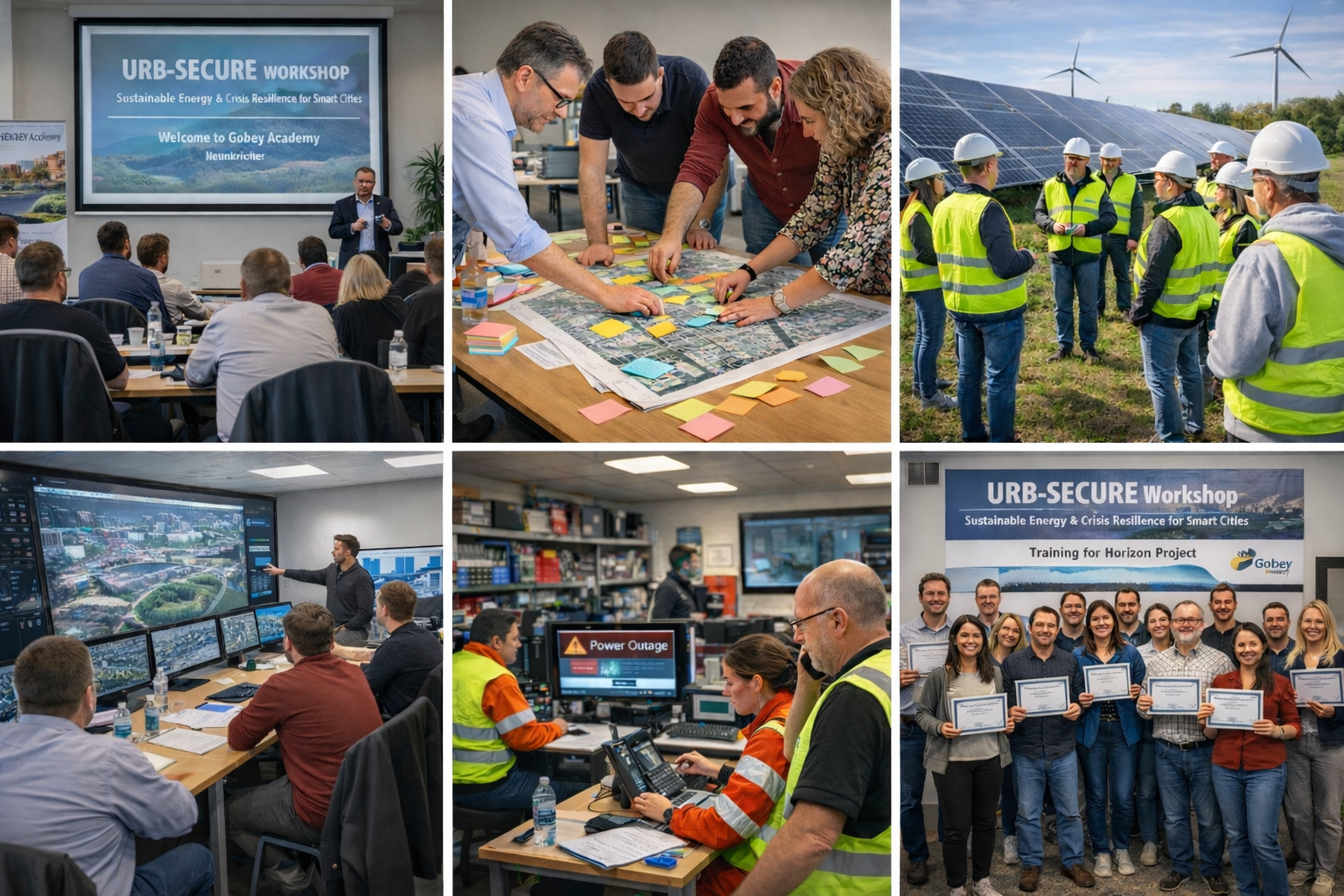
HORIZON 2020-URBAN-SECURE: Sustainable Energy and Crisis Resilience for Smart Cities
AI Technologies Digital Arts and AI Tools Environmental Protection Smart Cities and VillagesProject Description
URB-SECURE seeks to revolutionize urban energy systems and resilience planning by introducing an advanced, AI-powered ecosystem. This system is designed to maximize the use of renewable energy, strengthen energy autonomy, and equip cities with intelligent tools to anticipate and respond effectively to crises such as power outages, climate-related events, and cyber threats.
Objectives
- Design and deploy an integrated Smart Energy Management System (SEMS) that enables real-time monitoring, predictive analysis, and automated regulation of urban energy flows.
- Establish urban microgrids powered by renewable sources (solar, wind, and bioenergy), supported by AI-enhanced energy storage solutions.
- Develop a Crisis Intelligence Dashboard (CID) based on digital twin technology to simulate and manage emergencies related to energy supply, natural hazards, and cybersecurity risks.
- Strengthen community resilience through tools that encourage citizen participation, analyze energy consumption behaviors, and provide emergency communication platforms.
- Pilot and evaluate the system in major cities: Neunkirchen, Rome,Malmö,Temperre,Rinkgsagger,Lyon,Prague,Malta,Grete,Plovdiv,Gdansk,Brugge
Work Packages (WPs)
WP1 – Project Coordination and Ethics
Lead: Gobey Academy
Focuses on overall project governance, stakeholder coordination, regulatory compliance, and data protection.
WP2 – Smart Sustainable Energy Infrastructure
Lead: University of Amsterdam
Covers the development of AI-based SEMS, integration of IoT and smart meters for real-time data, and the design of urban microgrid systems.
WP3 – Crisis Intelligence and Management
Lead: Czech Technical University
Includes digital twin modeling for crisis scenarios, predictive simulations for outages and disasters, and coordination strategies among response agencies.
WP4 – Citizen-Centric Resilience Tools
Lead: University of Barcelona
Develops mobile applications for real-time alerts and energy insights, promotes participatory energy-saving initiatives, and introduces gamified training for communities.
WP5 – Urban Pilots and Evaluation
Lead: Polytechnic University of Milan
Implements the system in pilot cities, collects and validates data, and evaluates environmental and economic impacts.
WP6 – Replication and Policy Roadmap
Lead: Horizon GreenTech Cluster
Prepares guidelines for scaling across Europe, including policy frameworks and public-private collaboration models.
Expected Outcomes
- Achieve up to 20% reduction in urban energy consumption in pilot areas
- Improve energy outage response times by 30%
- Deliver a real-time crisis simulation platform adaptable across EU cities
- Empower citizens with digital tools for energy awareness and resilience
- Provide a scalable policy and technological framework for smart city development
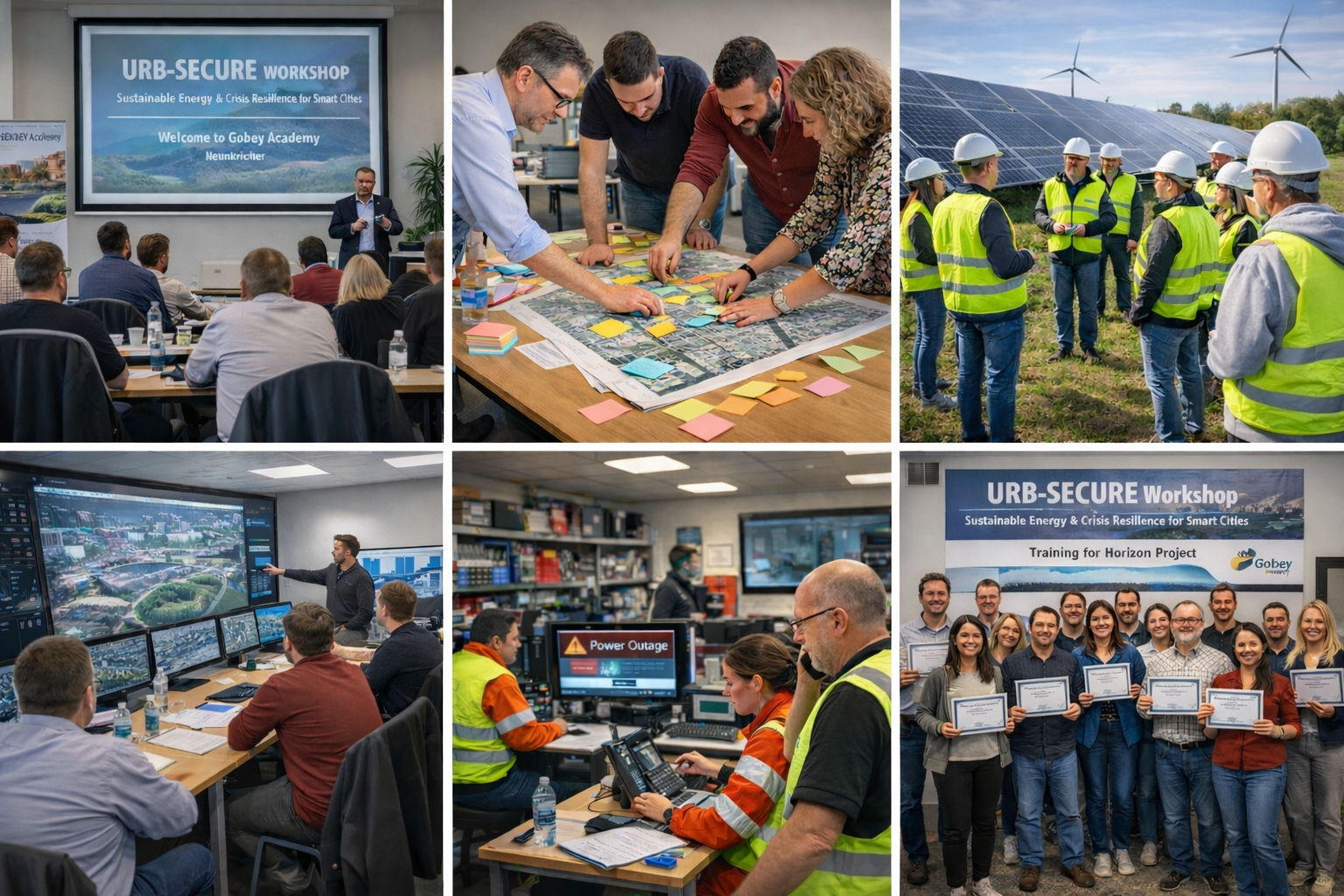
Project Images
Project Videos
Project Partners
Gobey Academy
Gobey Academy
GBA UG